A little clarity for your day
How to choose a wedding venue that fits your day
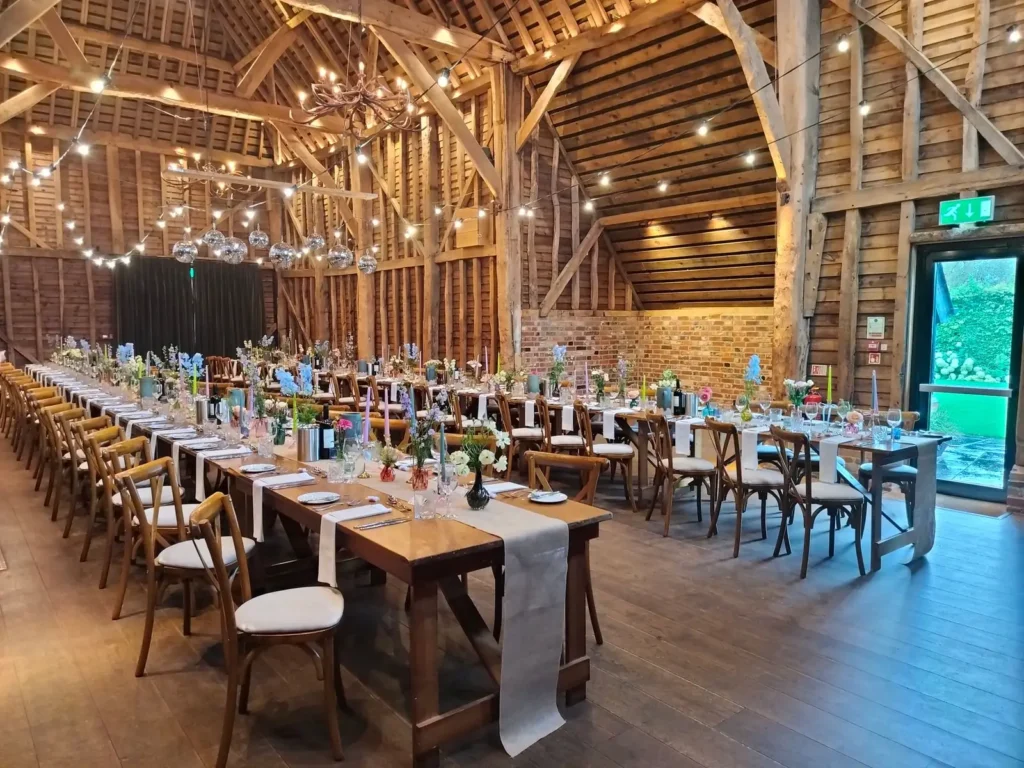
Choose a wedding venue by checking your non-negotiables first: who needs to attend, what you can comfortably spend, where you can celebrate and which dates work. Then compare the atmosphere and practical arrangements of the venues that remain. The best fit is a place that works for your actual day, not simply the photograph you like most.
A beautiful setting matters. So does being able to hear the speeches, get everyone home, serve the meal you want and understand the final bill. This guide gives you a way to bring those decisions together without turning your wedding into a spreadsheet exercise.
Use it before you start viewing, or when several venues are pulling you in different directions. The framework is Acre’s suggested planning method, not a scoring system that ranks individual venues. You can change its priorities to reflect the celebration you want.
What should you decide before looking at venues?
Start with people and priorities. Make an initial guest list, identify any access needs that affect the choice of building, and agree the parts of the day you would most regret compromising. You do not need finished invitations or an exact seating plan. You need a realistic description of the event the venue must support.
Separate a firm requirement from a preference. A step-free route for an essential guest may be a requirement; a staircase for photographs is a preference. Space for a particular cultural ceremony may be a requirement; the colour of the dining chairs probably is not. A requirement should be a genuine decision boundary, not a list of every attractive feature you have seen online.
Your one-page venue brief
- People: approximate ceremony, meal and evening guest numbers, including children.
- Place: workable areas, travel limits and essential transport connections.
- Money: the total you can allocate to the venue and the services being compared with it.
- Day: ceremony plans, meal style, music and the atmosphere you want.
- Essentials: access, dietary, faith, privacy or accommodation needs that could rule a place out.
- Flexibility: which dates, seasons, layouts or services you could change.
Write this together before requesting quotations. If one of you is imagining a relaxed weekend with everyone staying and the other is planning a single elegant dinner close to home, the venue search will expose the difference later. A short conversation now is easier than trying to reconcile two different plans after falling for a building.
How do you set a useful wedding venue budget?
Define what your venue budget includes before you compare prices. One figure may cover only use of the building; another may include food, drinks, staff, furniture and bedrooms. Neither is automatically better value. They are different offers until you put them on the same basis.
Work backwards from the amount you can comfortably spend on the whole wedding. Allow for the other things you want to fund, then decide what remains for the venue and connected services. Keep an unallocated margin that suits your circumstances rather than treating every pound as available for the first quote. There is no universal percentage that Acre can responsibly prescribe for every couple.
For each candidate, request a written quote using the same guest count, date assumptions, ceremony arrangement, meal and finish time. Include unavoidable additions, not optional upgrades you have not chosen. Ask whether tax and service charges are included, what counts towards any spending requirement and when amounts become due.
Use our guide to comparing Dorset venue prices for the detailed quote worksheet. If the uncertainty is about who supplies what, read dry hire versus inclusive wedding venues. If a quote contains a spending floor, understand wedding venue minimum spend before treating a smaller guest list as a saving.
Keep affordability and payment timing separate. A quote can fit your total budget but require a larger early payment than you expected. Ask for the payment schedule before committing, and note which figures can change if the date, guest count or menu changes. Do not rely on an old brochure or a directory’s starting price as your personalised offer.
Should you choose the location or the wedding date first?
Choose the constraint you cannot move first. If a particular date has real significance, search around its availability. If being near a person, community or ceremony location matters most, start with that area and allow a range of dates. If both are flexible, compare a few realistic combinations before settling on either.
Think about journeys rather than a radius on a map. A venue that looks nearby may involve slow rural roads, limited taxis or a difficult transfer between the ceremony and reception. Another slightly further away may be straightforward for most guests. Check likely travel arrangements at the time of day your event will finish, not only the daytime drive to a viewing.
For a destination-style celebration, list what guests must organise themselves. That might include an overnight stay, transfers or an additional day away. You can offer information without promising to pay for every journey. The important thing is to understand the practical commitment before you choose a remote setting.
If Dorset is your starting area, explore wedding venues in Dorset and narrow the search by the places that genuinely suit your guests. You do not need to compare every county in the country to make a good decision. A useful search boundary saves time and makes the quotations more comparable.
How do you match a wedding venue to the day you want?
Describe the experience before naming the building. Perhaps you want dinner in one room with conversations continuing late, a garden ceremony followed by a relaxed meal, or a formal celebration with bedrooms upstairs. Those descriptions tell you more than deciding that every barn is relaxed or every hotel is formal.
Different venue styles can support the same atmosphere, but the work required to create it may differ. Check what is already included, how the spaces connect and which restrictions affect your plans. A room with character may need very little decoration; an apparently blank space may require furniture, lighting, heating or staffing that you have not budgeted for.
Compare barns, hotels and country houses to understand the practical differences worth investigating. Then browse the matching directory collections, such as Dorset barn venues or Dorset country-house venues. A category helps you discover places; it does not prove that every place offers the same service.
Photos are a starting point, not a complete specification. Ask whether the furniture, lighting, flowers and outdoor areas in a photograph are included in your proposed booking. Check whether it shows the room and season you would use. Stock wedding inspiration can help you recognise a style, but cannot establish the features of a named venue.
How do you turn a long list into a useful shortlist?
Use three stages: rule out confirmed mismatches, investigate important unknowns, then compare preferences. This prevents a venue with unanswered questions appearing better than one that has clearly explained its restrictions.
Start with the essentials in your brief. If a venue confirms it cannot accommodate the dining number or your required ceremony, you can stop there. If its website simply does not say, record an open question. “Venue to confirm” means the answer has not been established, not that the facility is absent and not that it can safely be assumed.
| Stage | Question | Action |
|---|---|---|
| Essential fit | Does a confirmed fact rule it out? | Remove the mismatch, or revise your brief deliberately. |
| Open questions | Could an unknown answer change your choice? | Ask the venue before spending more time comparing. |
| Preference fit | Which suitable venue best supports your priorities? | Compare atmosphere, service and effort on the same basis. |
Keep the shortlist small enough to investigate properly. There is no ideal number for everyone, but adding another place is useful only if it offers something your existing options do not. A long list full of unanswered essentials can create the impression of progress without helping you choose.
Use Acre’s venue comparison to organise the available facts. Add your own notes about personal priorities, quotations and conversations. Directory information helps you discover and compare; your booking decision should rest on the venue’s current written offer.
What should a viewing help you discover?
A viewing should resolve the questions that photographs and brochures cannot answer. Walk through the day in sequence: arrival, ceremony, drinks, meal, speeches, evening celebration and departure. Notice whether a change of room requires guests to wait, cross uneven ground or leave their belongings somewhere unsecured.
Ask to see the proposed layout for your numbers, not just the most photogenic room arrangement. A room’s ceremony limit and seated dining limit can differ. Durlston’s official venue information, for example, lists different ceremony and seated-meal capacities for its Gallery. That illustrates why you need the figure for your specific use rather than a single headline capacity. See Durlston’s own room information; checked 29 September 2026.
Read how venue capacity works before your visit and take our viewing checklist with you. For a smaller celebration, look at room fit for a small wedding rather than focusing solely on a maximum guest number.
View the wet-weather arrangement if any essential part of your plan is outdoors. Ask where guests will actually sit, eat or gather if the weather changes and who makes that decision. Our wet-weather planning guide helps you test the alternative as a complete celebration, not an emergency footnote.
Talk through access with the people affected where possible. A label such as “accessible” is not a substitute for knowing the route, gradients, toilets, bedrooms and distances involved. Use the accommodation and access questions to establish the details. Keep personal medical information out of general enquiry forms; share only what is necessary to confirm practical arrangements.
How do you choose between two wedding venues?
Ask whose requirements you are trying to meet. Advice from family and friends can reveal a practical problem you missed, but it can also introduce preferences that are not yours. Keep an essential guest’s ability to attend separate from someone else’s preferred style, menu or tradition. You can listen thoughtfully without making every suggestion a condition of the booking.
Agree how the final choice will be made before another viewing changes the conversation. If someone else is contributing financially, clarify any expectations attached to that contribution early and privately. Do not treat an uncertain contribution as money already available in the venue budget. A clear shared boundary makes it easier to respond to attractive upgrades without reopening the whole wedding plan each time.
When opinions conflict, return to your brief and ask which option meets the agreed essentials. Then identify the preference that remains unresolved. This turns “I just like that one better” into a conversation about atmosphere, effort, privacy or convenience that you can actually work through together.
Compare the trade-offs openly rather than looking for a venue with no compromises. Once both places meet your essentials, decide which strengths matter most and which disadvantages you can comfortably accept. A quieter setting may involve more transport; a convenient hotel may involve sharing some public areas.
Try a short decision note for each finalist. Write its strongest reason to choose it, the principal compromise, the unresolved question and the next action needed. If the unresolved question could change the cost or feasibility of the wedding, resolve it before giving a score for atmosphere.
A decision note you can copy
We would choose this venue because: …
The compromise we accept is: …
Before booking, we need written confirmation of: …
The comparable total and payment dates are: …
Our alternative if this date is unavailable is: …
You can score preferences if that helps, but avoid false precision. A total of 87 versus 85 does not settle a question about how you want the day to feel. Use any score to expose disagreement and missing information. Do not let a numerical result override an essential requirement or a financial limit you have already agreed.
Ask each other what you would choose if nobody else saw the photographs. Then ask what you would choose if the weather forced every activity inside. Those two questions often reveal whether the appeal belongs to the whole experience or only one beautiful scene. Neither answer is wrong; it simply makes the choice more conscious.
What should be confirmed before booking a venue?
Make sure the written agreement matches the event you have discussed: date, spaces, access hours, guest assumptions, included services, compulsory suppliers, price basis and payment schedule. If something essential exists only in an informal conversation, ask for it to be documented.
Check privacy at room level. Exclusive use can apply to different areas and times, so establish what is reserved for you and what remains shared. Check supplier freedom too: a preferred supplier may be recommended or compulsory, depending on the venue’s rules and the service involved.
If you are planning a legal ceremony in England or Wales, use GOV.UK’s ceremony guidance and the relevant registration service to confirm the arrangements. Venue availability alone does not establish registrar availability or completion of the legal requirements. Scotland and Northern Ireland have different processes.
Read cancellation, postponement and changes provisions carefully. The Competition and Markets Authority’s consumer guidance explains why a cancellation charge or deposit should not be judged solely by the label attached to it. Seek appropriate advice about a disputed term rather than relying on a general planning article to interpret your contract.
Our guide to when to book a wedding venue sets out a practical order for these decisions. It does not promise that every venue needs the same lead time. Your flexibility, ceremony arrangements and guest needs are more useful guides than an arbitrary countdown.
Common questions about choosing a wedding venue
Should you view a venue before asking for prices?
Ask for enough information to establish basic fit first. An indicative offer for your date and guest count can prevent a wasted visit. Expect the final quote to depend on the arrangements you choose; a starting price is not a complete budget.
Can you book a venue before your guest list is final?
You can plan around a realistic range, but ask how changes affect room suitability, charges and deadlines. Know the minimum you are committing to and the maximum the intended layout supports. Do not assume every missing guest reduces the final bill.
What if the venue does not publish a detail you need?
Ask directly and keep it as an open question until confirmed. Missing information is not evidence of a missing facility. For an essential requirement, obtain a clear answer before making a non-reversible commitment.
What is the most important factor?
There is no single factor for every wedding. Start with feasibility and affordability, then choose the setting that best supports your priorities. A venue can be excellent and still be the wrong fit for your guest group or the day you want.