A little clarity for your day
Wedding venue styles: barn, hotel or country house?
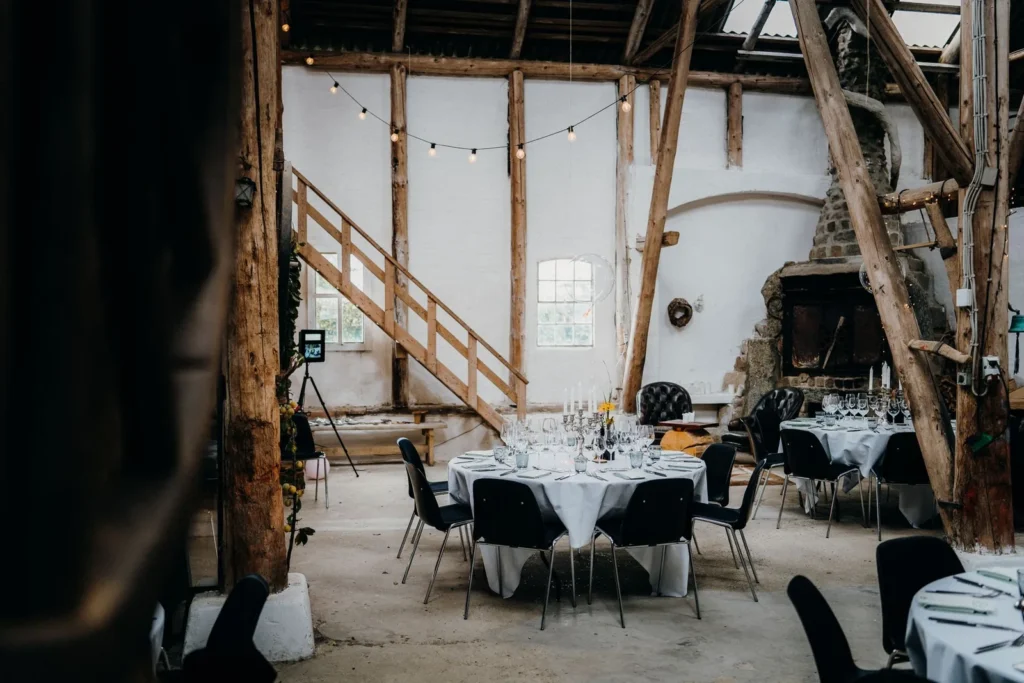
Choose a wedding venue style by the experience you want and the practical support you need, not by the building label alone. A barn, hotel or country house can each host a relaxed or formal day. The useful differences are the spaces, included services, privacy, accommodation and work needed to make your plans happen.
Perhaps you love timber beams, but also want an easy overnight stay. Perhaps a country-house setting appeals, but a formal dinner does not. Those preferences are not contradictions. The right search starts with how you want to spend the day, then checks which individual venues can support it.
How do barn, hotel and country-house venues compare?
A style category describes a starting point, not a package. Rather than assuming one type is cheaper or easier, ask each venue the same practical questions. The table below is a viewing framework, not a claim that every venue in a category has particular facilities.
| Style | Explore the appeal | Confirm the practical fit |
|---|---|---|
| Barn | Timber, scale, rural setting and an adaptable dining space | Heating, indoor alternatives, catering facilities, transport and what furnishing is included |
| Hotel | A connected celebration with potential bedrooms and hospitality services | Private versus shared areas, room allocation, other events and supplier arrangements |
| Country house | Characterful rooms, gardens and the possibility of a house-party feel | Which rooms are hired, access between them, guest bedrooms, operating hours and privacy |
Start with our venue-selection framework if you have not yet agreed your guest range and budget. Those boundaries will help you assess style without getting attached to a setting that cannot meet an essential need.
What should you look for in a barn wedding venue?
Look at the barn as a working event space, not just a backdrop. Ask where the ceremony, drinks, meal and evening celebration take place. If one room serves several purposes, establish who changes the layout, how long that takes and where your guests will be comfortable during the change.
Walk the arrival route in your mind as well as on the ground. Consider guests arriving in the dark or rain, deliveries reaching the catering area and anyone who needs a shorter or step-free route. A rural setting can be part of the charm; the travel and access arrangements still need a clear plan.
Ask what creates the finished look in the photographs. Are the tables, chairs, festoon lights, draping and outdoor furniture included, optional or supplied by a previous couple? A beautiful interior may reduce your wish for decoration, but it does not prove there are no equipment or setup costs.
Check comfort as carefully as character
Ask about heating and ventilation for the room and the month you are considering. Discuss where coats will go, whether there is a quiet seating area and how sound behaves during speeches. You do not need technical acoustic measurements to ask whether guests at the back can hear and whether a microphone is available.
Do not equate a barn with dry hire. Catering, coordination and accommodation arrangements vary by venue and package. Our dry-hire versus inclusive guide explains that separate question. Once the format fits, explore barn wedding venues in Dorset for named places to investigate.
What should you look for in a hotel wedding venue?
Find out how your celebration fits within the hotel’s normal operation. Ask which event rooms, lounges, gardens and entrances are reserved for you, and which areas remain in use by other guests. Sharing a reception desk may be entirely acceptable; sharing a space you expected to use for private drinks may not be.
If bedrooms are important, get the room arrangement in writing. Distinguish a suggested accommodation option from rooms actually allocated to your group. Ask about booking deadlines, release dates, payment responsibility and what happens if guests do not reserve the expected number.
Consider the transition from the wedding to the overnight stay. Can guests reach bedrooms easily? Will the event finish before hotel quiet hours or access restrictions change? Where can guests wait if check-in is later than the ceremony? A building with bedrooms is useful only if the specific booking works with your timetable.
Understand the service rather than assuming it
Ask who coordinates the venue team and what that role covers. A person managing the meal service may not also organise every external supplier, ceremony detail or family request. Clear responsibilities are more valuable than an appealing job title.
Discuss menus, dietary requirements and any supplier you particularly want to use before committing. In-house provision may simplify planning, but the details still matter. Browse Dorset hotel wedding venues, then confirm the offer for the actual spaces and date on your shortlist.
What should you look for in a country-house wedding venue?
Look beyond the facade to the rooms you will actually use. A house may have several smaller spaces, a separate event building, a marquee arrangement or a combination. Ask for the proposed route through the day and check how that works with your guest count, particularly if dinner and dancing happen in different places.
A house-party feel depends on more than exclusive-looking photographs. Establish when access begins, which rooms are private and whether bedrooms are included. If you want a meal or gathering the evening before, ask whether the contract permits it and what staffing or catering arrangements apply.
Historic features can be a major attraction, but ask practical questions without assuming the answers. Check steps, thresholds, toilets, lifts where relevant and the distances between spaces. A ground-floor dining room does not establish a step-free journey from the parking area through the whole celebration.
Check the scope of a weekend booking
Count the usable hours rather than simply the nights. Arrival, setup, guest check-in, music finish, breakfast and final departure may each have different times. Ask which activities are included during the stay and which require a separate arrangement. A longer hire is not the same thing as unrestricted use.
For an example of why package detail matters, Abbots Court’s own FAQs describe a hire arrangement combining the house, grounds and event spaces with an overnight stay; checked 29 September 2026. That is a named example, not a promise about other houses or your date. Explore Dorset country-house venues and ask each one for its current terms.
What if a venue belongs to more than one style?
That can be an advantage. A country house may offer a barn for dinner; a hotel may occupy a historic manor; a rural estate may combine gardens, accommodation and contemporary event rooms. Pick the spaces that matter to your day rather than trying to force the venue into a single category.
Compare the proposed booking, not the whole property. If your package uses a modern function room, photographs of a historic drawing room do not tell you how dinner will feel. Ask whether the photogenic spaces are available to your group, when you can use them and whether another event has priority.
Outdoor areas deserve the same scrutiny. A garden setting should have a realistic indoor alternative for every activity you consider essential. Read our wet-weather plan guide and ask to see the actual alternative, not just hear that one exists.
How do you make a shortlist without overthinking the style?
Write three experience words and three practical needs. For example, “warm, sociable, unhurried” alongside “one site, manageable travel, room for a seated meal”. These are illustrative priorities, not a prescribed wedding style. They give you a better filter than choosing every image that looks beautiful.
Keep a small selection across more than one building type if each genuinely fits. Request comparable information, then use a viewing to test the atmosphere. Ask how the space looks at your guest count and at the time of day you will use it. A room photographed at dusk with a full guest list may feel different at a small afternoon celebration.
Your style decision note
- The part of the setting we love is…
- The experience it should support is…
- The practical assumption we still need to check is…
- The extra work or cost needed to achieve the look is…
- The compromise we are happy to make is…
Before booking, settle the separate questions of exclusive use and supplier freedom. Neither can be inferred from the venue’s architectural style. Use the venue viewing checklist to capture answers consistently.
Common questions about wedding venue styles
Are barn weddings cheaper than hotel weddings?
Not necessarily. Compare the complete offer for your date and numbers. A low room-hire figure may exclude services that another package includes. The relevant question is the cost of delivering the same celebration, not which category has the lowest advertised starting price.
Is a hotel the easiest option to organise?
It may be convenient if the services and rooms you need are included and coordinated, but check the responsibilities. No building category guarantees a particular level of planning support. Ask who handles each important task and who you contact when a plan changes.
Can a small wedding work in a large country house?
Potentially, if the booked rooms and commercial terms fit your group. Look at the actual dining and ceremony arrangement rather than the property’s maximum capacity. Our small-wedding guide explains how to test that fit.
Do attractive gardens mean we can legally marry outside?
No. Confirm the ceremony arrangements with the venue and relevant authority. For England and Wales, begin with official ceremony guidance. A space for photographs or a symbolic ceremony does not by itself confirm arrangements for a legal marriage.