A little clarity for your day
How to choose a small wedding venue that feels just right
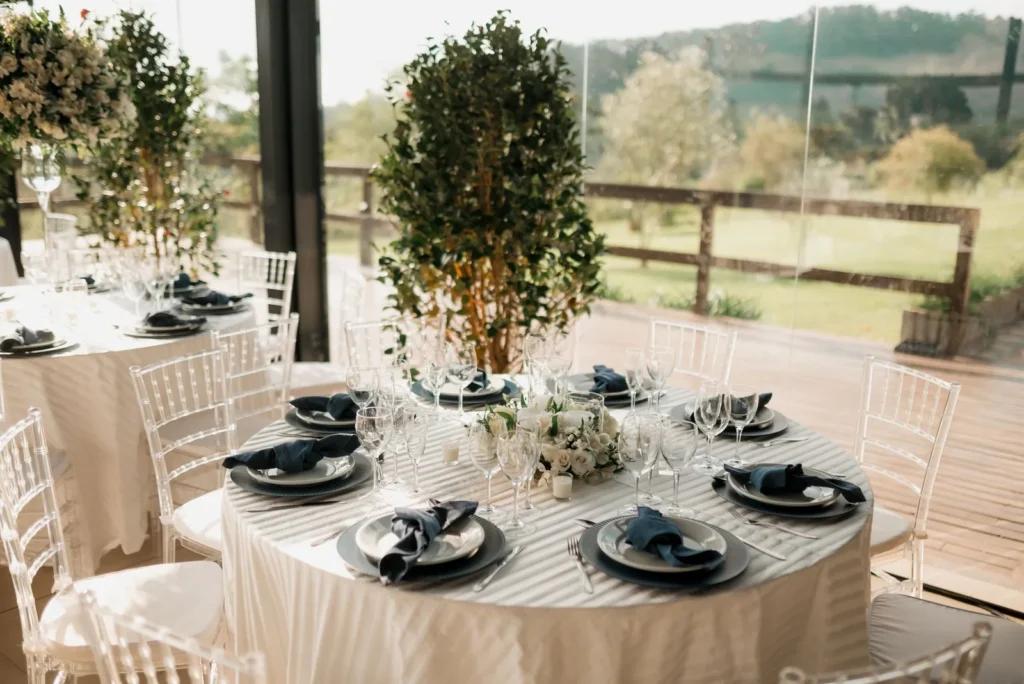
Choose a small wedding venue by the room and booking you will actually use, not the property’s maximum capacity. Check that your guest group feels comfortable together, that the minimum financial commitment fits your numbers, and that every stage of the day works without needing a larger crowd to create the atmosphere.
“Small” and “intimate” are useful descriptions, but they do not give you a floor plan or a quotation. A large property may contain a room that suits your celebration beautifully. A small-looking venue may still have a package designed around more guests than you intend to invite.
This guide focuses on choosing a setting for a smaller group. For the meaning of ceremony, dining and evening numbers, use our separate venue-capacity guide. There is no universal guest-number threshold that makes every wedding small.
What does your small wedding need to feel like?
Begin with the people, not a reduced version of a larger wedding. Decide whether the celebration centres on a ceremony, a long meal, dancing, an overnight stay or several of those things. A small guest list does not require a shortened day, just as a large guest list does not require every traditional element.
Think about how your guests know each other. One shared table might suit a close group who enjoy conversation; smaller tables might make it easier for different groups to settle in. Neither arrangement is inherently more intimate. Ask what the proposed room can accommodate comfortably and how service will work around it.
Identify anyone whose practical needs should influence the choice. That may involve step-free access, a quieter place to rest, a shorter journey, somewhere to feed a baby or a bedroom nearby. In a small group, the absence of one important person can feel significant. Check essential arrangements early rather than leaving them as details to solve after booking.
How do you tell whether a room suits a small wedding?
Ask to see a plan for your actual guest count, including furniture, service space and any dance floor or ceremony layout. A maximum-capacity figure shows an upper limit under particular conditions. It does not show how the room feels with fewer people or which configurations are permitted.
Visit the specific room in your proposed package. Stand where the meal, speeches and ceremony will happen. Look at the distance between guests, the position of entrances and the spaces people are likely to drift towards. Ask whether unused parts can be arranged naturally without creating barriers or obstructing access.
For a concrete example of room-level information, Durlston’s official wedding page describes its Belvedere for up to 50 guests for ceremonies and canapés; checked 29 September 2026. That is not a seated-meal figure or a confirmation of suitability for your booking. It shows why asking about the particular room and activity is more useful than the property’s overall capacity.
Ask for a realistic illustration, not an empty-room promise
If possible, ask to see photographs of the same room arranged for a similar number of people. Check which furnishings are included and which were brought in for the photographed event. A smaller table arrangement can look appealing online while depending on flowers, lighting or hire items outside your proposed budget.
Think about sound as well as appearance. Can everyone hear a speech without shouting? Is there background noise from a public bar or another event? Where could someone have a quieter conversation during music? You are testing whether the space supports the way your group wants to spend time together.
Why can a small wedding still have a substantial venue cost?
Some commitments do not reduce in proportion to the guest count. Your quotation may include room hire, a minimum number of chargeable meals, a spending threshold or required accommodation. Ask which costs vary with attendance and which stay fixed for the date and spaces you have chosen.
Do not invite extra people simply to make a package appear better value unless you genuinely want them there. First compare the total commitment with a different room, date or venue. A smaller offer that costs more per person can still cost less overall and fit your celebration better.
Our minimum-spend guide explains the arithmetic. For your own comparison, request a quote for the expected attendance and a lower realistic number. Ask whether the same minimum applies to both and whether the offer changes if you move from a weekend to another available date.
Questions about the financial fit
- What is the total compulsory commitment for this room and date?
- Is there a minimum guest count, food-and-drink spend or bedroom allocation?
- What changes if fewer guests attend?
- Which included services would we actually use?
- Is there another room or booking format that better suits our group?
Keep your comparisons consistent. A private dinner after a ceremony elsewhere is a different event from a full-day booking with ceremony space, drinks, music and an overnight stay. Neither is a lesser wedding. The point is to compare offers that deliver the celebration you actually want.
How do you plan the rhythm of a smaller wedding?
Plan activities and transitions around the group rather than trying to fill time. A long conversation over a meal may be exactly what you want; a long wait while a room is reset may not be. Ask where guests will be during each transition and what is available there.
If the same room hosts the ceremony and dinner, find out who changes the furniture and how long they need. If guests move to a bar or garden, confirm that space is reserved or otherwise available. Check the indoor alternative if the transition depends on being outside.
Think about the evening honestly. If only some guests want to dance, a separate comfortable seating area may matter more than a large dance floor. If you prefer dinner and conversation without a party, tell the venue so the quote and timetable reflect that plan rather than a standard package.
For outdoor elements, read the wet-weather guide. A smaller group may offer more layout choices, but a backup room still needs to accommodate the actual activity, furniture and access routes.
Do you need exclusive use for a small wedding?
Not necessarily. Decide which moments and spaces need to be private. A private dining room within a larger property may suit you well if the shared entrance, toilets or garden do not undermine your plans. Conversely, full privacy may be essential for your ceremony or the experience you want.
Ask for a clear boundary rather than relying on “intimate”, “private” or “exclusive” in a brochure. Which rooms are reserved, during which hours, and who else may be on site? Can unrelated guests pass through the area where you are gathering? Will another event create sound or access conflicts?
Our exclusive-use guide separates whole-property hire from private event areas. You may decide that a smaller private space with good service offers more of what you want than paying for a whole building you will barely use.
What should you send before viewing a small wedding venue?
Give the venue enough detail to suggest the right offer. “A small wedding” leaves too much open. Include approximate numbers for each part of the day, whether you want a legal ceremony on site, the meal format, your date flexibility and any essential access or accommodation requirements.
A practical viewing brief
We are planning a celebration for approximately [number] people, with [ceremony plans] and [meal/evening format]. We are considering [dates or season]. Could you show us the room arrangement you recommend, confirm the minimum financial commitment, and explain which areas would be private to us?
Our essential practical requirements are [brief details]. Please let us know if any part needs a separate arrangement before we book a viewing.
At the viewing, use the main venue checklist selectively. Prioritise the questions that could change your choice rather than trying to interrogate every feature of the building. Save written answers alongside the quote and any room plan.
Where should you start looking?
Use location, style and practical requirements to discover options, then ask about the smaller rooms or booking formats available. Do not assume a venue is unsuitable merely because its headline maximum is large, and do not assume a place suits a small celebration because it looks cosy in photographs.
Explore Dorset wedding venues, hotel venues or country-house settings as starting points. These are discovery collections, not confirmed small-wedding packages. The venue needs to confirm the particular arrangement.
For the wider decision, return to how to choose a wedding venue. A small wedding still deserves the same clarity on costs, ceremony arrangements, service and booking terms as any other celebration.
Common questions about small wedding venues
Is a restaurant or private dining room automatically cheaper?
No. Compare the complete offer, including the room arrangement, minimum spend and services you need. A lower-looking hire charge may come with a different financial commitment. Ask for the total for your actual event rather than comparing labels.
Should we book the smallest room available?
Choose a room that comfortably supports your layout and activities. Too little space can make service, movement or access difficult. A room slightly larger than the dining area may be useful if it also provides comfortable seating or space for the ceremony.
Can we have a legal ceremony in any private room?
Do not assume so. For England and Wales, check the official ceremony guidance and confirm the arrangements with the venue and registration service. A reception booking alone does not establish a legal ceremony arrangement.